At the start of every year, organisations across the UK begin mapping out their workplace wellbeing calendars.
Awareness months get scheduled. Budgets are allocated. Internal campaigns are planned. Guest speakers are explored.
There is always a real appetite to do better for employees, which is brilliant to see.
But there is still one area that gets missed far more often than it should.
Sleep.
Despite being the foundation that everything else sits on, it is rarely given the same space as mental health, menopause, stress or neurodiversity. Yet when you look at the data, the lived experiences of employees, and the day-to-day challenges businesses are trying to manage, sleep is often the common thread running underneath it all.
When people are exhausted, everything becomes harder. Emotional regulation drops. Stress tolerance lowers. Productivity declines. Decision making is affected. Burnout accelerates. Safety risks increase, particularly in high-risk industries.
You cannot build a well workforce on an exhausted one.
Sleep is not an add-on to wellbeing. It is the infrastructure that holds it up.
One of the things I hear most from HR and Wellbeing leads is that they understand sleep matters, but they struggle to know where it fits into the year. With so many awareness campaigns already in place, it can feel like there is no space left to introduce something new.
So this year, alongside refreshing my brand and updating my brochure, I decided to make that part easier.
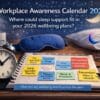
I have mapped sleep education topics across existing awareness months so that organisations can integrate sleep into campaigns they are already running, rather than trying to create standalone initiatives from scratch.
It means sessions sit naturally alongside themes employees are already engaging with, and it also makes them easier to plan, repeat and budget for.
For example, January lends itself perfectly to a “January Blues” Sleep Reset, supporting energy, motivation and post-holiday adjustment.
In February, many organisations focus on family and parenting support, which aligns closely with my Parental Rage session, helping working parents navigate overwhelm and emotional load.
March includes both World Sleep Day and International Women’s Day, opening the door for core sleep education alongside conversations around gender equity and the disproportionate impact sleep deprivation has on women.
As we move through the year, the alignment continues.
April’s focus on stress and heart health links strongly to the physiological role sleep plays in cardiovascular wellbeing.
May’s Mental Health Awareness Week creates a natural space to talk about sleep as preventative mental health infrastructure rather than a reactive fix.
June brings the opportunity to explore andropause and male sleep health, an area that is still hugely under-discussed.
July often centres around carers and the sandwich generation, making it an important time to talk about caring for yourself while caring for others.
Even August, which is typically quieter in the wellbeing calendar, opens an interesting conversation around sleep and financial wellbeing, particularly decision making, resilience and cognitive clarity.
September has increasingly become known as “Sleeptember” in the wellbeing space, offering a powerful reset point after summer and before the final quarter push.
October is one of the busiest awareness months, with menopause and neurodiversity both front and centre, and sleep plays a critical role in supporting both.
November’s Men’s Health focus creates space to reframe sleep within performance, strength and long-term health, while December brings in conversations around chronic health conditions, fatigue and disability support.
When sleep education sits within awareness months like this, engagement is always higher. Attendance improves, internal communications teams are more likely to promote sessions, and budgets are already aligned to the theme.
It stops sleep being viewed as a “nice extra” and positions it as a core part of workplace wellbeing strategy.
Bookings for 2026 awareness months have already started to come in, particularly around menopause, mental health and World Sleep Day. Planning early tends to give organisations the most flexibility, especially when they want to run multiple sessions across departments or regions.
To make things easier from a budgeting perspective, I have also created a fixed awareness-month rate when sessions are delivered within their themed month. This allows organisations to access high-impact, evidence-based education without the need for bespoke builds each time.
Alongside these updates, the wider conversation around sleep in the workplace is clearly growing.
Over the past year, this work has been recognised through several award nominations, including the Great British Workplace Wellbeing Awards and The This Is Manchester Awards, as well as being named One to Watch at the Woman Who Solopreneur Awards.
That recognition reflects what many organisations are now starting to see for themselves.
If you want to protect mental health, improve performance, reduce burnout and create sustainable wellbeing strategies, sleep has to be part of the conversation.
If you are currently planning your 2026 wellbeing calendar, now is the time to look at where sleep might sit alongside the awareness campaigns you already run.
Because when your people sleep better, everything else you are trying to build becomes that much stronger.